

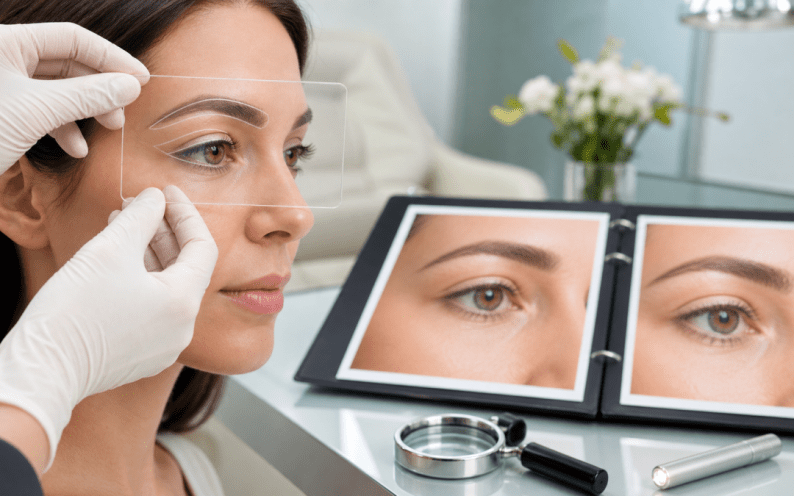
Reading Eyelid Surgery Photos Like a Surgeon
Eyelid surgery photos can look simple at first glance. The eyes look fresher, the lines look softer, and it is easy to think that is the whole story. Surgeons do not look at eyelid photos that way. We scan tiny details in shape, balance, and expression that say a lot about technique and long-term results.
Learning to read eyelid surgery photos like a surgeon gives you more confidence when you research eyelid surgery in Toronto. Not every nice-looking photo reflects careful work or a natural, lasting result. Here we will walk through the key details that we study every day so you can look at before-and-after photos with a sharper eye.
How Surgeons Judge Upper Eyelid Results
Upper eyelid blepharoplasty is meant to clean up extra skin, reduce heaviness, and open the eyes a bit, while still keeping a familiar, expressive look. The goal is that friends think you look rested, not different.
When we look at upper eyelid photos, we focus on:
- the symmetry of the eyelid creases from side to side
- the distance from the eyelashes to the brow
- the shape of the upper lid, soft and rounded instead of hollow
Natural upper eyelids usually show:
- a smooth, gentle crease that sits in a believable place
- a small, even strip of visible eyelid skin when the eyes are open
- brows that sit in their normal position, not oddly high
Warning signs in photos:
- Over-arched or surprised-looking eyes, as if the brows are lifted rather than the lids refined
- Creases set too high, so the upper lid looks stretched or artificial
- One side showing a different crease height or a missing eyelid platform
- A hollow, sunken upper lid where too much fat or skin appears to be removed
If you see eyes that look wide and startled or lids that seem scooped out, that is usually not the subtle upper eyelid result that most people want.
Spotting Subtle Lower Eyelid Improvements
Lower eyelid surgery aims for a smoother under-eye contour, fewer bags and shadows, and a gentle flow into the upper cheek. The best lower eyelid work often looks like better sleep and better lighting, not obvious surgery.
When we study lower eyelid before-and-after photos, we check:
- the lower lid margin, for shape changes from almond-shaped to rounded
- the outer corners, to see if they stay in their natural position
- the balance between under-eye hollowing and natural fullness
Healthy, subtle results usually show:
- less bulging and puffiness, but not a flat, empty area
- a soft slope from the lower lashes into the upper cheek
- corners of the eyes that sit in about the same place as before
Red flags in lower eyelid photos:
- A sharp edge between the lid and the cheek instead of a smooth transition
- Eyes that look more round or “sad” at the outer corners, as if pulled down
- Visible tightness or pulling of the lower lid away from the eyeball
- Over-correction that creates a hollow, expressionless under-eye area
If the under-eye region looks tense, shiny, or pulled, that can signal that the surgery may have changed the eye shape more than most patients intend.
Checking Eyelids Against the Rest of the Face
Surgeons who focus on facial work, including facelift and rhinoplasty, always look at harmony. Refreshed eyelids should match the forehead, cheeks, jawline, and nose so that the face tells one clear age story.
When you study photos, ask yourself:
- Do the eyelids match the rest of the face, or do they look like they belong to a different decade?
- Does the smoother lid area sit well with the cheek volume and jawline?
- Does the nose shape still match the more awake eye area?
Well-balanced results often come from planning. Sometimes that can mean pairing eyelid surgery with:
- a subtle facelift, so the midface and jawline look as fresh as the eyes
- a soft refinement of the nose, so the profile stays in harmony
- non-surgical treatments, so skin tone and texture match the surgical results
The key is that when you look at the full face after-photo, your eye does not get stuck on any one feature. You simply see a rested, natural-looking face.
How Timing, Swelling, and Seasons Affect Photos
In Toronto, people often plan eyelid surgery around work breaks, school breaks, or quieter social seasons. Heat, humidity, and stronger sun in the summer can affect healing, activity levels, and when photos are taken.
Swelling and timing can change what you see in a gallery:
- Early photos can show puffiness in the upper and lower lids.
- At 3 to 6 months, swelling usually settles, and the true shape shows more clearly.
- Scars in the upper lid crease are often pink at first, then fade to blend with natural lines.
When you look at before-and-after photos, it helps to:
- check for notes about how long after surgery the photo was taken
- look for consistent lighting and background so you are not fooled by shadows
- prefer neutral expressions, since smiling or squinting can change how lids appear
If you are viewing summer results, remember that a slightly puffy look may simply be early swelling, not the final outcome.
Red Flags and Green Flags in Surgeon Galleries
Photo galleries can teach you a lot if you know what to watch for. You want to see patterns, not just one or two standout results.
Typical green flags:
- Consistent, natural-looking eyelid results across different ages and ethnicities
- Similar lighting, angles, and backgrounds for all photos
- Both close-up eyelid shots and full-face views for context
Typical red flags:
- Heavy “glamour shot” makeup that hides the eyelid crease or lower lid detail
- Inconsistent camera angles that make it hard to compare before and after
- Missing side or oblique views, especially when combined with facelift or rhinoplasty
- A few amazing results that do not match the average quality of the gallery
To use this well, try:
- comparing several surgeons’ galleries for eyelid surgery in Toronto
- paying attention to patients whose features and age are similar to yours
- noting how eyelid changes blend with any facelift or rhinoplasty shown in the same patient
Reviewing Your Own Eyelid Possibilities
Once you get used to looking at photos like a surgeon, you can start to picture what might suit your own face. It can help to save a few examples where the eyelid shape, brow position, and overall facial balance look close to what you would hope for.
Good questions to bring to a facial plastic surgeon:
- How do my natural eyelid folds and skin thickness affect the plan?
- Is my brow position part of the “heavy lid” look? Should that be addressed?
- How does my midface support the lower lids? Would that change the approach?
- Would combining eyelid surgery with facelift or rhinoplasty create a more balanced result for me?
At our Yorkville clinic, we look at your own photos, listen to your goals, and study how your eyelids fit with your forehead, nose, and cheeks. That deeper, in-person assessment goes far beyond what any online gallery can show and helps guide a plan that feels like you, just more rested and confident.
Refresh Your Eyes with Expert, Personalized Care
If you are considering a subtle yet impactful way to rejuvenate your appearance, we invite you to explore eyelid surgery in Toronto with Dr. Cory Torgerson. During a private consultation, we will carefully assess your concerns, explain your options, and outline a treatment plan tailored to your goals. To book an appointment or ask questions about candidacy, please contact us so we can help you take the next step with confidence.