
Ponytail Lift Toronto
Mini Facelift by Dr. Cory Torgerson
At Dr. Cory Torgerson’s facial cosmetic surgery clinic, the ponytail lift and mini facelift in Toronto are designed for exactly this stage of aging. With minimal scarring and lighter recovery than a traditional facelift, they offer noticeable, natural improvement for the right candidates.

What Is a Mini Facelift?
A mini facelift (sometimes called a mini lift, mini lower facelift, mini face tuck, or even a “minute face lift” in marketing) is a smaller version of a facelift that targets the lower two-thirds of the face without the longer incisions and neck dissection used in a full facelift.
In a standard mini facelift, a short incision is hidden in front of the ear and curves around the earlobe. Through this opening, the skin is gently lifted, and the underlying SMAS (superficial musculoaponeurotic system) layer is tightened or repositioned. Addressing this deeper layer is what gives a mini facelift more longevity
What Is a Deep Plane Mini Facelift?
The deep plane mini face lift technique goes a step further than a standard SMAS lift: the surgeon works in the layer beneath the SMAS, gently releasing the ligaments that tether the facial tissues. This allows the cheek fat pad and lower face to move as a unit, rather than stretching the skin to “cover” the problem.
What is a Ponytail Lift or Endoscopic Facelift in Toronto?
The ponytail lift or “scarless” facelift is a specific style of mini facelift that places the incisions high in the hairline to ensure that the scars stay hidden even when the hair is pulled back into a ponytail. It is sometimes referred to as an endoscopic ponytail facelift, because an endoscope (tiny camera) is often used to assist the lift.
Because the scars are concealed in the hair, the ponytail lift is appealing to patients who routinely wear their hair up or who are particularly concerned about visible incisions around the ear.

Incisions for a Standard Mini Facelift and Ponytail Lift
The incision placement is what differentiates the ponytail lift from a traditional mini facelift. While the incision placement is different, with both surgeries the scars are designed to hide in natural creases or within the hair.
Standard Mini Facelift Incisions
- The incision starts in front of the ear, often beginning in the temporal hairline.
- It follows the natural curve of the ear, then passes around the earlobe.
- It usually stops just behind the earlobe instead of extending far into the hairline behind the ear.
Ponytail or “Scarless” Facelift Incisions
- Small incisions are hidden in the scalp behind the hairline at the temples and sometimes in the central forehead.
- These incisions are used to release and elevate the brow, temple, and mid-face with the help of an endoscope.
Benefits of a Mini or Ponytail Facelift
A mini facelift or ponytail facelift sits in a specific niche between injectables and a full facelift. For the right person, the main benefits include the following:
- targeted improvement of early jowls and jawline blurring
- elevation of descended cheek fat to restore mid-face fullness
- smoothing of smile lines and marionette lines without flattening the expression
- shorter incisions than a traditional facelift, often with reduced downtime
- scars that are well concealed along the ear or within the hairline
- a more “rested” look that others read as healthy and refreshed rather than obviously operated
While a mini facelift offers great benefits for the right candidate, it is still not a substitute for a full deep plane facelift in patients with extensive neck laxity, heavy jowls, or major volume loss.
Who Is a Candidate for a Mini Facelift?
Mini facelift patients are usually people with good skin quality and minimal neck laxity who are bothered mainly by mid-face sagging and early jowl formation. In other words, the right person for this procedure has real aging changes, but is not yet a full facelift candidate.
You may be a candidate for a mini facelift in Toronto if
- you are in your 30s or 40s (or early 50s with a good neck)
- you see early jowls, heavier smile lines, and sagging in the cheeks
- your neck shows only mild laxity, or it simply does not bother you
- you are in good general health and able to undergo anaesthesia
- you do not smoke, or you are prepared to stop for the recommended pre- and post-operative period
- you understand that the goal is to look fresher, not unrecognizable
Mini facelifts can also work well for patients who have lost a significant amount of weight and are left with mild to moderate facial skin laxity, as long as the neck and lower face are not severely affected.
Who Is a Candidate for a Ponytail Face Lift?
The ponytail lift is more selective. Ideal candidates typically
- notice mild to moderate descent of the brows and outer eye area
- have early to moderate mid-face sagging, but a fairly tight neck
- prefer incisions hidden in the hairline rather than around the ear
- want a subtle, upward “refresh” rather than a dramatic change
- are comfortable with the idea that the neck is not the main focus
During your consultation, Dr. Torgerson will examine your hairline, forehead height, and brow position to see whether a ponytail facelift makes sense for your anatomy. It is not offered automatically to everyone, and in some patients, a mini facelift with a short scar around the ear is actually more discreet.
Your Mini Facelift Consultation in Toronto
A consultation for a mini facelift involves a detailed assessment of your face and discussion about your goals. At your visit, you can expect the following:
- A thorough review of your medical history and current medications
- A discussion about what specifically bothers you in the mirror and in photos
- A careful facial examination, including skin quality, bone structure, and soft tissue support
- Standardized photographs for planning and for later comparison
- An honest explanation of which techniques will and will not address your concerns
Written information and a customized quote will be provided so you can think about your decision at home without pressure.
Mini Facelift vs. Traditional Facelift: Which Is Right for You?
Patients often come in asking for a mini facelift because it sounds simpler. The more important question is: Which procedure actually matches the changes in your face?
In broad terms:
- A traditional (full) facelift treats the mid-face, jawline, and neck together. Incisions usually extend further behind the ear and may include an incision under the chin to address bands, fat, and loose neck skin.
- A mini facelift targets mainly the mid-face and jowls. The neck may improve indirectly, but it is not the primary focus.
- A mini lower facelift is a variation that concentrates on the jawline and early jowls, with less emphasis on the upper cheek.
Dr. Torgerson will review your options during the consultation and recommend the appropriate procedure.
Mini Face Lift in Toronto: What to Expect
On the day of surgery, you will arrive at Dr. Torgerson’s accredited facial cosmetic surgery centre in Toronto. After meeting the nursing team and the anaesthesiologist, you will review the plan one more time with the surgeon.
The procedure itself involves the following steps:
- Anaesthesia administration: Mini facelift and ponytail lift procedures are usually performed under either general anaesthesia (you are fully asleep) or IV (twilight) sedation with local anaesthetic (you are relaxed and comfortable).
- Making incisions: Incisions are made along the planned lines (short scar around the ear for a mini facelift, or small hidden incisions in the scalp for a ponytail lift).
- Repositioning deeper layers: The skin is gently elevated to expose the deeper support layers. The SMAS and deeper tissues are repositioned and secured, often using deep plane techniques to lift the cheek and jowl in a vertical, natural direction.
- Closing incisions: Excess skin is trimmed carefully, avoiding over-tightening. Incisions are closed with fine sutures to encourage smooth, discreet scars.
- Immediate recovery: After surgery, you will wake up in the recovery area with a soft dressing and head wrap.
The surgery duration usually ranges from 2 to 3 hours, depending on whether additional procedures such as fat grafting or neck liposuction are included.
Combining Mini Face Tuck with Additional Procedures
Many patients in Toronto choose to combine a mini facelift or ponytail facelift with other procedures for more complete facial harmony. Many times, this means longer surgery duration, but a single, combined recovery afterward.
Common procedure combinations include
- fat grafting or nano fat transfer to temples, cheeks, or nasolabial folds
- upper or lower eyelid surgery to address eyelid heaviness or under-eye bags
- neck liposuction in patients with early fullness under the chin but good skin tone
- lip lift for better balance between the upper lip and lower face
- CO2 laser resurfacing or other laser treatments to improve skin texture and fine lines
Recovery After a Mini Lift
A mini facelift or ponytail lift is usually an outpatient procedure, which means you go home the same day with a responsible adult. The first week is focused on rest and uncomplicated self-care.
Typical recovery milestones:
- Days 1 to 3: Swelling and tightness are at their peak. Keeping your head elevated on extra pillows and using cold compresses as instructed helps. Light walking around the house is encouraged.
- Days 4 to 7: Bruising starts to fade, and tightness feels less intense. Many patients feel comfortable doing computer work from home at this stage. Sutures are usually removed after one week.
- Days 7 to 10: Makeup can usually cover most bruising. Many people return to office work or non-strenuous jobs.
- Weeks 3 to 4: Swelling continues to settle. You may feel comfortable in social situations without anyone recognizing that you had surgery, beyond noticing that you look rested.
- Weeks 4 to 6: Higher intensity exercise and heavier lifting are gradually reintroduced based on how you are healing and on your surgeon’s instructions.
A supportive chin strap or facial garment may be recommended for the first 1 to 2 weeks, especially at night, to reduce swelling and support the new contours. Your specific schedule and wear time will be explained before surgery.
The First Step Of Your Journey Begins With A Conversation
Mini Facelift Results
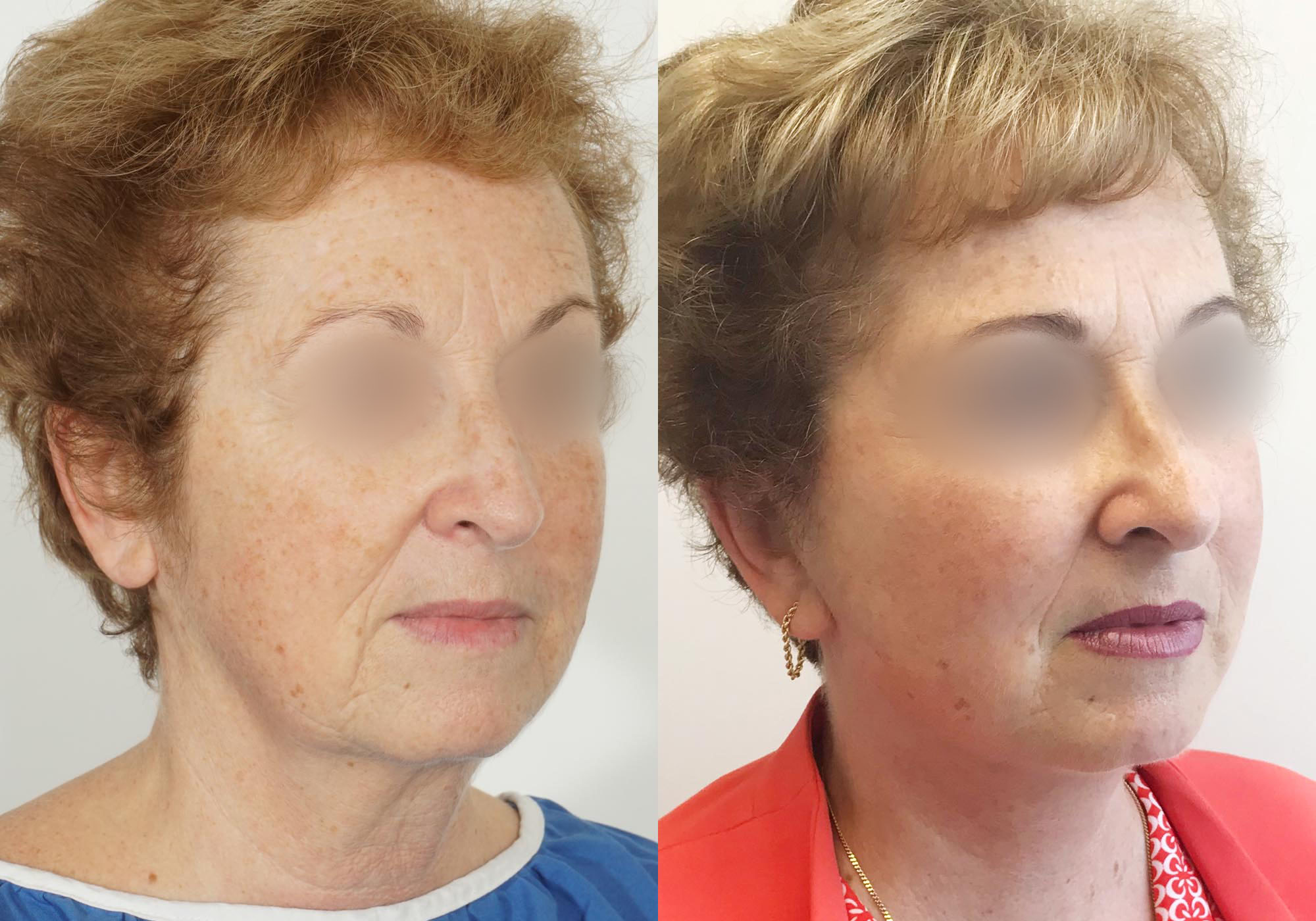
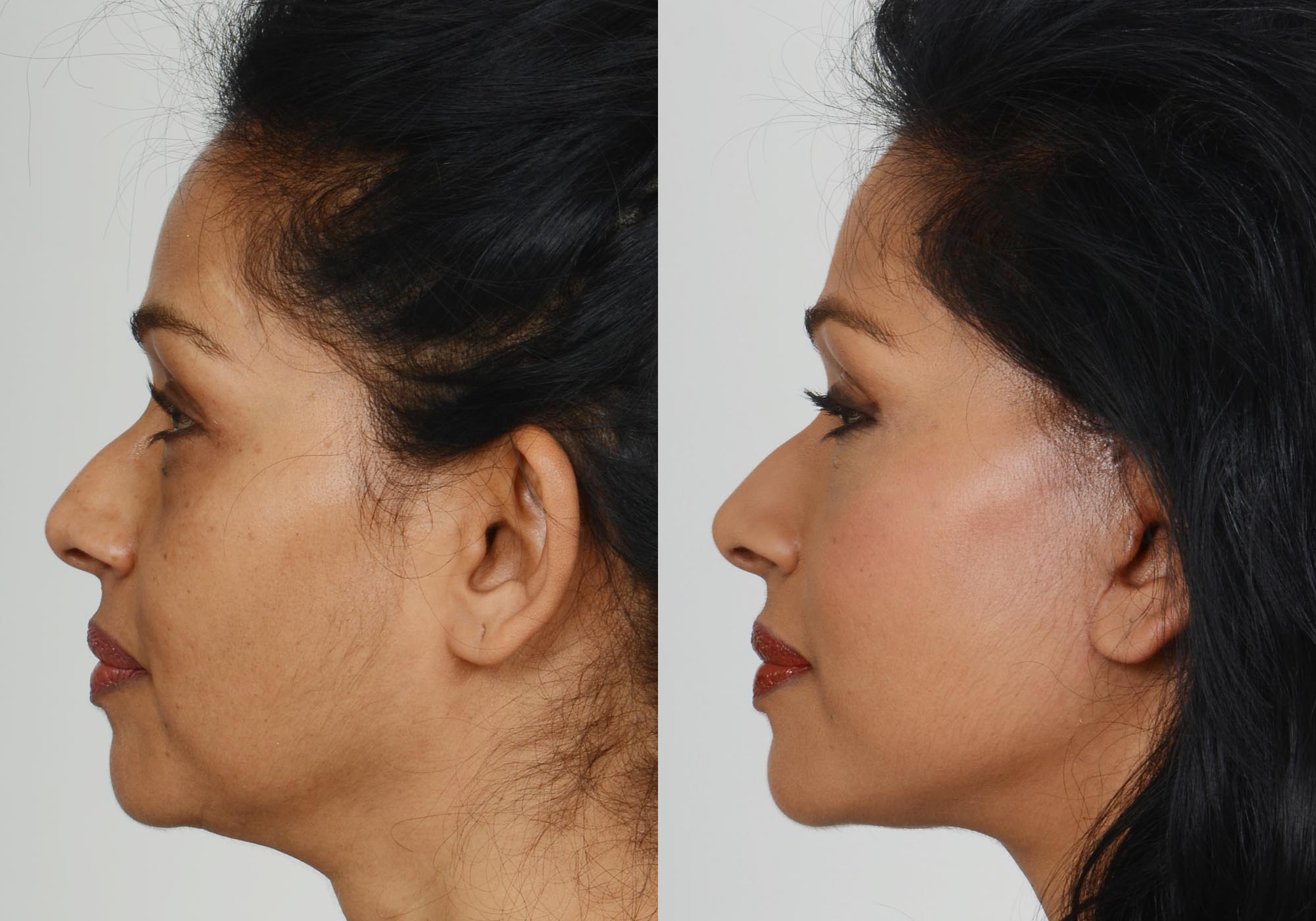
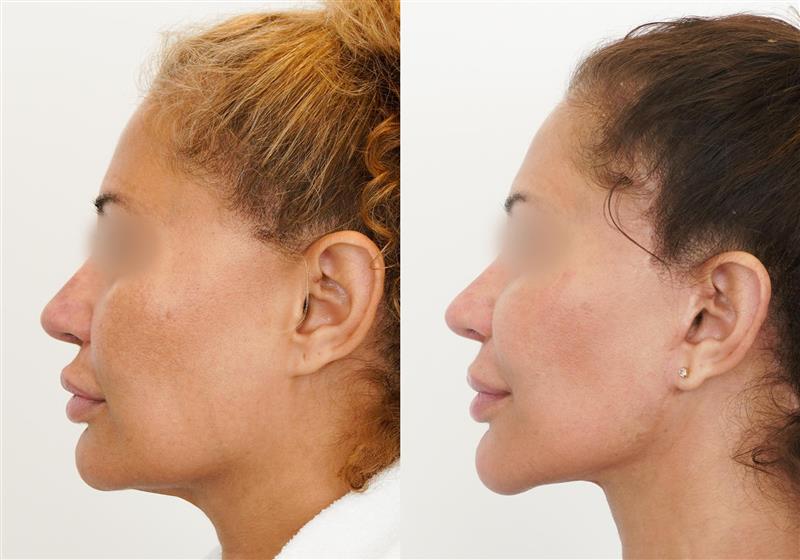
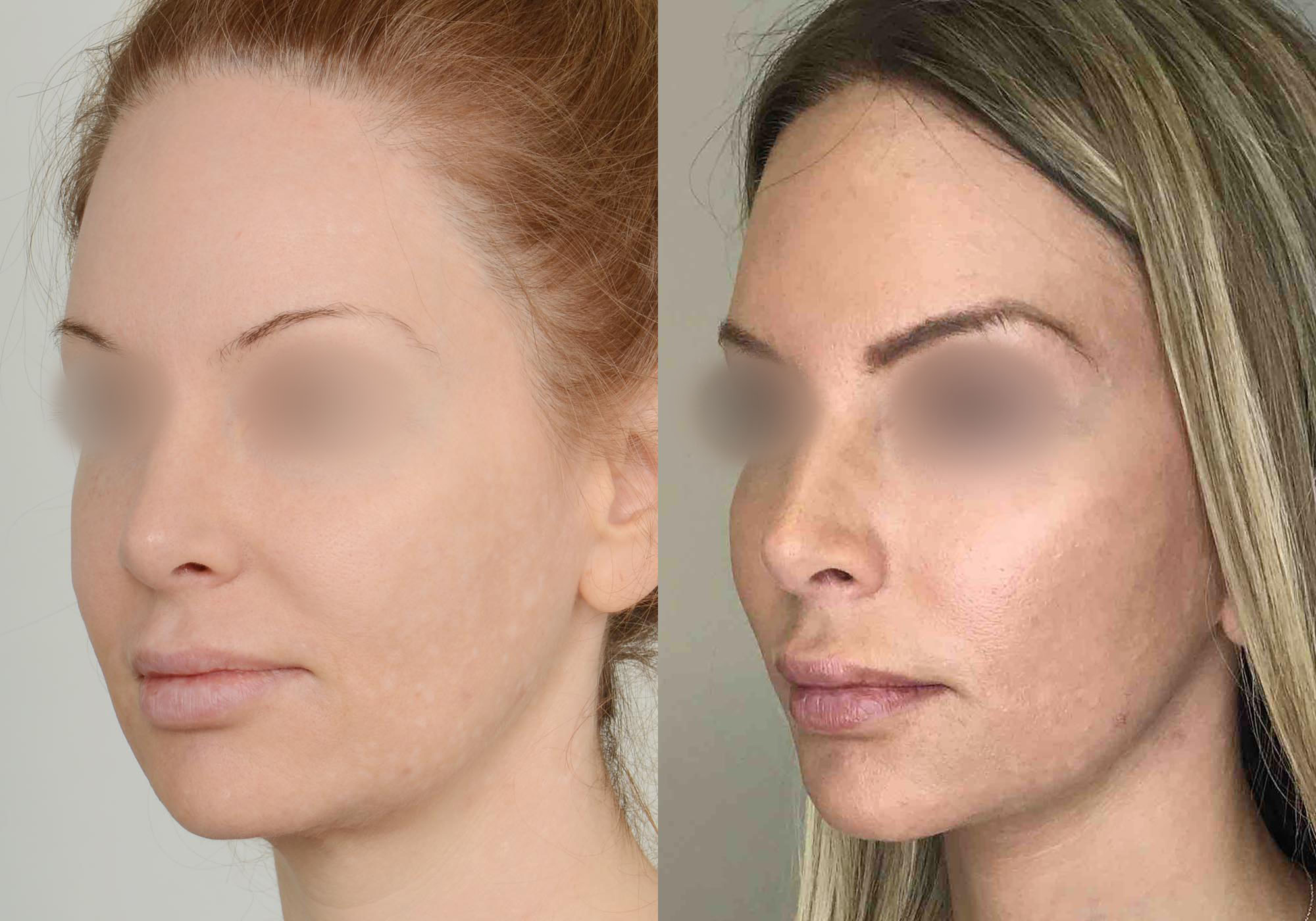
A mini facelift can create a noticeable, refreshed change in the mid-face and jawline while keeping your features natural. Most patients see a lift through the cheeks, improved definition along the jawline, and a softer look around the mouth. Results generally last several years, and patients continue to look like a refreshed version of themselves as aging progresses.

How Much Does a Mini Facelift Cost in Toronto, Canada?
A mini face lift in Toronto costs $30,000 on average, depending on factors like the surgeon’s experience, facility fees, the type of anesthesia, and the extent of the procedure. Because each face is different, you will receive a personalized quote after your consultation rather than a one-size-fits-all price list.
How Much Does a Ponytail Facelift in Toronto Cost?
The ponytail facelift cost in Toronto starts at $30,000 and is usually comparable to other advanced mini facelift techniques. The use of endoscopic equipment, specialized training, and the time required to work through smaller scalp incisions are reflected in the fee, which is generally similar to or slightly higher than a standard mini facelift, but less than a full facelift and neck lift package.
You will receive a clear written quote outlining the ponytail lift cost, any combined procedures, and what is included in your fee so that there are no surprises later.
Why Choose Dr. Torgerson for Mini Facelift Surgery in Toronto?
As a Royal College-certified head and neck surgeon who focuses solely on the face, neck, and scalp, Dr. Torgerson has extensive experience with deep plane facelift, mini facelift, and endoscopic ponytail facelift techniques. His goal is to create results that look refreshed rather than “pulled” or obvious, and to match the technique to each patient rather than forcing one approach on everyone.
Schedule Your Mini Facelift Consultation
A ponytail lift or mini facelift can be a smart option if you are noticing genuine signs of facial aging but do not yet need a full facelift and neck lift. If you are curious about a ponytail facelift or mini facelift in Toronto and want a clear, detailed opinion that is tailored to your face, schedule a private consultation with Dr. Cory Torgerson at his clinic.
Mini Facelift FAQs
How many years does a mini facelift last?
How long does a ponytail lift last?
What are the downsides to a mini facelift procedure?
What is the best age to get a mini facelift?
Can a 70-year-old have a mini facelift?
Is a mini facelift worth it?
How painful is a mini facelift?
Are you awake during a mini facelift?
How long do you have to wear a chin strap after a mini facelift?
Most patients wear a supportive chin strap or facial garment continuously for the first several days, then at night for 1 to 2 weeks, depending on swelling and their level of comfort.
Can you have a mini facelift twice?
Yes, it is possible to have a second mini facelift in the future or to move from a mini facelift to a more comprehensive facelift as aging progresses.
What is the best facelift option?
The “best” facelift option is the one that matches your anatomy and your priorities. In general:
- A deep plane facelift is often best for more advanced lower face and neck aging.
- A mini facelift may be ideal for younger patients with mid-face and jawline concerns but a good neck.
- A ponytail facelift works well for selected patients with mild to moderate mid-face and brow descent who want hairline-hidden scars.
- An isolated neck lift is more commonly used in men or women whose main concern is an obtuse or heavy neck with relatively good facial tone.
Is a mini facelift the best facelift option?
For some patients, yes; for others, no. If you are in an earlier stage of aging and mainly want to tighten the mid-face and jawline, a mini facelift can be an excellent choice.


