
Spot Trouble Before It Starts With Your Facelift Choice
A facelift in Toronto should not make you look like a different person. When it is planned well, it can gently lift sagging skin, define the jawline, and refresh the cheeks so that you look rested, not “pulled.” Eyelid surgery, or blepharoplasty, can soften heavy lids or bags, and rhinoplasty can refine the nose so that it sits in balance with your other features.
Bad results rarely come out of nowhere. They are often visible in the planning stage if you know what to watch for during consultations. That is where your choice of surgeon, technique, and overall plan for the face really matters.
Natural-looking facial rejuvenation is always the goal. The best results blend the eyelids, mid-face, jawline, and nose so that nothing stands out as “done.” At our Yorkville facial plastic surgery clinic, we focus on this overall balance, not just one feature in isolation.
Red Flags in Before-and-After Photos You Should Never Ignore
Before-and-after photos tell you far more than any words on a clinic page. When you look at facelift, blepharoplasty, and rhinoplasty galleries, pay attention to how the photos are taken, not just the end result.
Look for consistency in:
- lighting that is similar in both photos
- camera angles that match, especially side views
- neutral facial expressions, not smiling in one and serious in the other
- a clear note on how long after surgery the “after” photo was taken
If these basics are off, it can be hard to judge the real outcome.
For facelifts, warning signs in photos can include:
- a distorted or raised hairline
- ears that look pulled back or oddly shaped
- mouth corners that seem too tight or stretched
- an overly flat or hollow area under the eyes
With eyelid surgery, be wary if the lower lids look sunken or the eyes seem round and “stared open.” For rhinoplasty, pay attention if the nose looks too small for the face, the bridge is sharply scooped, or the tip looks pinched. When the nose and chin do not match in strength, the whole profile can feel off.
Good results look calm and unforced. You should see:
- subtle but clear improvement
- the person’s character and expressions still present
- smooth transitions between the eyelids, cheeks, and jawline
- a nose that blends into the face instead of stealing attention
If you need to stare at a photo to figure out what was done, that is usually a good sign.
How Unrealistic Promises Lead to Unnatural Facelift Results
Words like “scarless facelift,” “no swelling, no downtime,” or “look 20 years younger overnight” might sound exciting, but they should raise concern. Any real surgery involves incisions, healing, and a recovery period. When promises sound too perfect, the focus may be on selling, not on safety.
These kinds of claims can push people toward choices that increase the risk of odd or fake-looking results, such as:
- over-tightening the skin to chase dramatic change
- removing too much eyelid skin or fat to erase every line
- reshaping the nose too aggressively, so it no longer suits the face
For example, removing too much upper eyelid skin can make it hard to close the eyes fully, while taking too much from the lower lids can create that hollowed “skeletonized” look. With rhinoplasty, chasing a tiny or trendy nose shape can actually make someone look older, not younger.
Healthy expectations focus on:
- improvement, not perfection
- harmony between eyes, nose, lips, and jawline
- a natural recovery timeline that allows swelling and bruising to settle
Many people in Toronto like to plan facelift, eyelid, or nose surgery ahead of busy social seasons. This is smart, but it still needs to respect how the body heals. Realistic planning leads to better choices and calmer recovery.
Questions to Ask Your Surgeon to Avoid a Facelift Regret
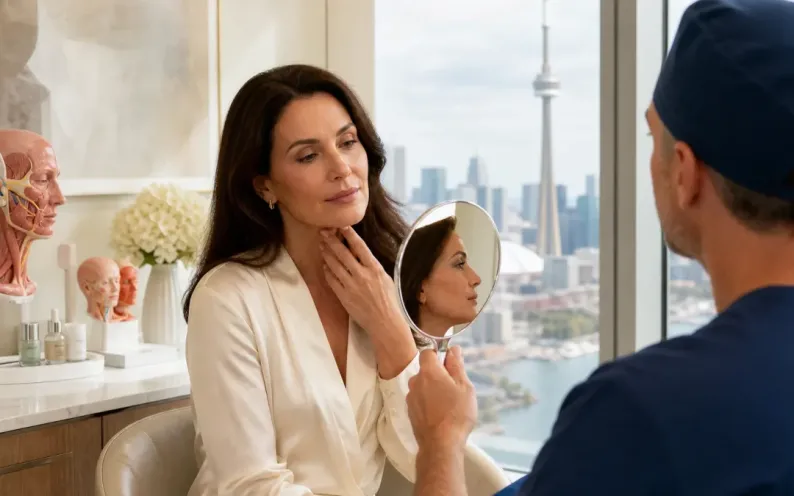
The consultation is your chance to spot warning signs before you commit. The goal is not to quiz your surgeon, but to understand how they think about your face and your safety.
Helpful questions:
- What specific training do you have in facial plastic surgery?
- How often do you perform facelift, blepharoplasty, and rhinoplasty?
- Can we review before-and-after photos of patients with a similar face and concerns to mine?
Ask how they build a customized plan, rather than using a one-size-fits-all technique. You might say:
- How do you decide which areas to lift, such as mid-face, jawline, or neck?
- How do you factor in my eyelid position, cheek volume, and skin quality?
- If we change my nose, how will that affect how my chin and jawline look?
It is also important to talk openly about risks and revisions:
- What are the most common issues you see after facelift, eyelid surgery, or rhinoplasty?
- How often do your patients need revision surgery?
- How do you handle problems like visible scars, lingering tightness, or asymmetry?
Honest, clear answers, with no pressure and no guarantees of perfection, are a positive sign. If you feel rushed or brushed off when you ask about risk, that is a concern.
Balancing Facelift, Eyelids, and Nose for a Harmonious Result
One of the biggest causes of a “done” look is treating only a single area without considering the rest of the face. For example, lifting the cheeks and jawline but ignoring very heavy upper eyelids can leave the face looking mismatched. The lower face looks young, but the eyes tell a different story.
A thoughtful plan for a facelift in Toronto often includes a full assessment of:
- upper face, including the eyelids and brow
- mid-face, including cheeks and the area under the eyes
- lower face and jawline
- nasal shape and projection
Sometimes a small change to the eyelids or nose can make a facelift result look more natural. Other times, non-surgical treatments can help with fine lines or volume instead of more pulling.
Key ideas for a harmonious look:
- Subtle contouring instead of dramatic reshaping
- Replacing or supporting lost volume where needed, rather than only tightening
- Respecting each person’s ethnicity and natural facial identity
The goal is for friends and family to say that you look rested and refreshed, not “different.” When the features support each other, the surgical work fades into the background and your face, as a whole, looks like a fresher version of you.
Your Next Step Toward a Safe, Natural-Looking Refresh
Planning ahead gives you time to make calm, informed choices. Many people start thinking about facelift, eyelid surgery, or rhinoplasty months before they want to see their final results, which is smart if you have important events or travel coming up.
Practical steps you can take now:
- Gathering a few reference photos of faces that you like, focusing on shape more than exact features
- Writing a short list of what bothers you the most, such as eyelid heaviness, jowls, or nasal hump
- Noting any past surgeries, health issues, or medications to discuss clearly at your consultation
By slowing down, asking the right questions, and studying real photos with a critical eye, you can reduce the risk of bad facelift results. At Dr. Cory Torgerson’s Yorkville clinic, our focus is on facial balance, natural lines, and careful planning so that your outcome feels like you, only more rested and confident.
Refresh Your Appearance with a Personalized Treatment Plan
If you are considering facial rejuvenation, we invite you to explore how a facelift in Toronto with Dr. Cory Torgerson can be tailored to your unique features and goals. Our team will guide you through every step, from your first consultation to your recovery, with a focus on safety, comfort and natural-looking results. To discuss your options or schedule a consultation, please contact us today.