

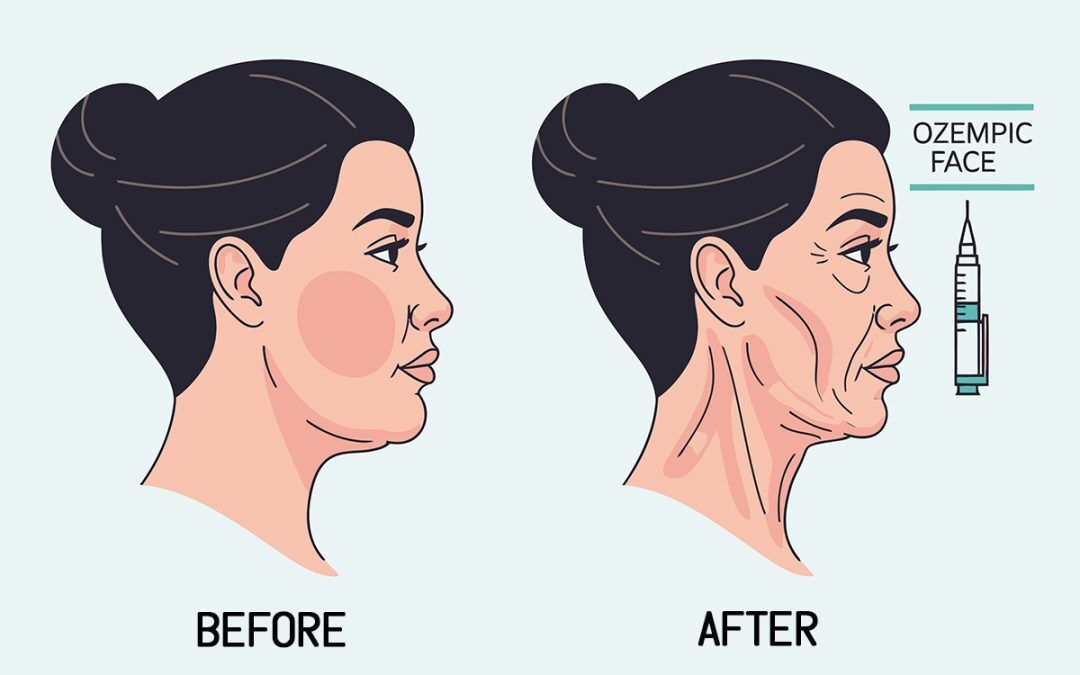
While Ozempic may be a miracle drug for patients suffering from type 2 diabetes or obesity, it does come with some unwanted side effects. One of those is the dreaded “Ozempic face” that many celebrities are seen with: a hollowed-out, saggy appearance resulting from rapid weight loss. The good news is that there are options to treat Ozempic face without gaining all the weight back. Dr. Cory Torgerson and his team offer an array of modern procedures – both invasive and non-invasive – to reverse facial volume loss and restore youthful plumpness.
What Is Ozempic Face / Ozempic Skin?
The term “Ozempic face” or “Ozempic skin” refers to the changes in the face that can happen as a result of rapid weight loss while taking Ozempic (semaglutide), medication for type 2 diabetes.
The term “Ozempic face” first became popular on social media when a famous dermatologist used it to describe the way that Ozempic affected some of his patients. Notably, Ozempic face is not a medical condition, nor a side effect of the medication itself. Instead, it is a side effect of the rapid weight loss associated with taking Ozempic. This means that you could get Ozempic face without ever taking Ozempic if you lose weight quickly by other means, like having a bariatric surgery or adopting lifestyle changes.
What Does Ozempic Do to Your Face?
You can’t lose weight specifically in your stomach, thighs, or arms. With any weight loss, you will be losing some of your facial fat as well. Unfortunately, this may make your face look not just thinner, but older as well.
Here is what rapid weight loss, such as what you experience after taking Ozempic, can do to your face:
- Decreases facial volume: Subcutaneous fat (fat under your skin) is an important part of your facial structure, giving you that plump, youthful look. When you lose subcutaneous fat, you may be unpleasantly surprised to notice a more “hollow” appearance and sagging skin.
- Causes skin to lose elasticity: Rapid weight loss reduces the skin’s levels of elastin and collagen, two important proteins that keep your skin plump and stretchy.
- Speeds up signs of aging: It is natural to lose some subcutaneous fat with aging. Rapid weight loss can speed up this process, causing signs of aging to appear faster.
Signs of Ozempic Face
When you lose weight quickly, you may notice signs of aging in your face that seem to appear quickly and out of nowhere. Common signs of Ozempic face include:
- Sunken eyes: Weight loss can reduce the fat pads under your eyes, giving your eyes a sunken appearance.
- Wrinkles: As your skin loses elastin and collagen, wrinkles and fine lines become more visible.
- Sagging skin: Just like weight loss can cause “extra” skin in your arms and stomach, the same can happen in your face, creating the appearance of loose, sagging skin in the face and neck.
- Thin lips: As you lose fat from your face, your lips will be affected as well, losing youthful plumpness and becoming thinner.
- More prominent bone structure: With less fat to pad your facial bones, your cheekbones and jawline may become more prominent.
How to Avoid Ozempic Face Aging
If you take Ozempic as a prescription medication, you may not be able to avoid Ozempic face aging completely. However, you can often minimize facial changes associated with weight loss by taking a gradual approach and focusing on staying healthy.
- Drink plenty of water. Keeping your skin hydrated will improve its plasticity (the ability to return to its original shape after weight loss).
- Eat enough calories. Ozempic and similar medications reduce your hunger cues. Make sure you are still getting sufficient nutrition each day to slow down the weight loss process.
- Pay attention to protein. Protein is necessary to maintain and build muscle. Getting enough protein will help keep your muscles even when you lose fat.
- While exercise won’t tighten the skin, it can tone the muscles underneath, creating a leaner appearance and filling in some of the loose skin throughout your body.
- Choose a drug or dosage with a slower weight loss rate. If, despite your efforts, you notice concerning side effects on your face, speak with your doctor about reducing the dosage or changing to a different medication.
Does Ozempic Face Go Away?
Ozempic face won’t go away on its own. If you gain back the weight that you lost, your face may start looking fuller again. However, if you are committed to maintaining your new, lower weight, the effects on your face will likely stay the same.
The good news is that cosmetic treatments and skin-tightening procedures can reverse Ozempic face and reduce the appearance of wrinkles and sagging skin.
Best Ozempic Face Treatments
If you don’t love your post-Ozempic face, consider speaking with Dr. Cory Torgerson about your options to restore facial volume and tighten the loose skin. After carefully reviewing your facial structure and discussing your goals, he will recommend the best treatment for Ozempic face.
How to Restore Volume to Your Face Naturally
While you may not be able to fully restore lost volume to your face naturally, certain healthy practices, such as those below, can improve the appearance of your skin and boost the cosmetic treatment results.
- Eat well. A nutritious, balanced diet with plenty of antioxidant-rich vegetables and fruits can help slow down your skin’s aging process.
- Don’t smoke. Smoking promotes more wrinkles and causes the skin to look aged sooner.
- Prioritize skin care. Wash your face with a gentle cleanser twice per day and use a professional-quality moisturizer to keep your skin plump. Always wear sunscreen and reapply it throughout the day.
- Try collagen supplements. Taking collagen supplements may help promote skin hydration and reduce signs of aging.
- Get plenty of sleep. A lack of sleep takes a toll on your body, and your skin is no exception. Keep your skin looking younger for longer by getting plenty of rest every day.
Restore Youthful Volume with Dr. Cory Torgerson
While Ozempic face is an unpleasant side effect of weight loss, don’t let pictures of Ozempic face scare you away from taking a medication prescribed by your doctor. Achieving a healthy weight is important, and any related facial changes can be addressed with a range of cosmetic procedures.
If you are taking a medication like Ozempic, Wegovy, or Mounjaro, don’t hesitate to reach out to Dr. Torgerson and his team to discuss potential treatments for Ozempic face. Book your consultation today.
Ozempic Face FAQs
Does Ozempic age your skin and your face?
While Ozempic doesn’t age your skin and your face directly, it can give the appearance of premature aging in the face by reducing facial fat. This, in turn, may lead to sagging skin and more visible lines or wrinkles.
Does Ozempic change your look?
Yes, Ozempic can change your appearance, particularly in the face, due to rapid weight loss. Some people experience a hollowed or sagging look known as “Ozempic face.”


