
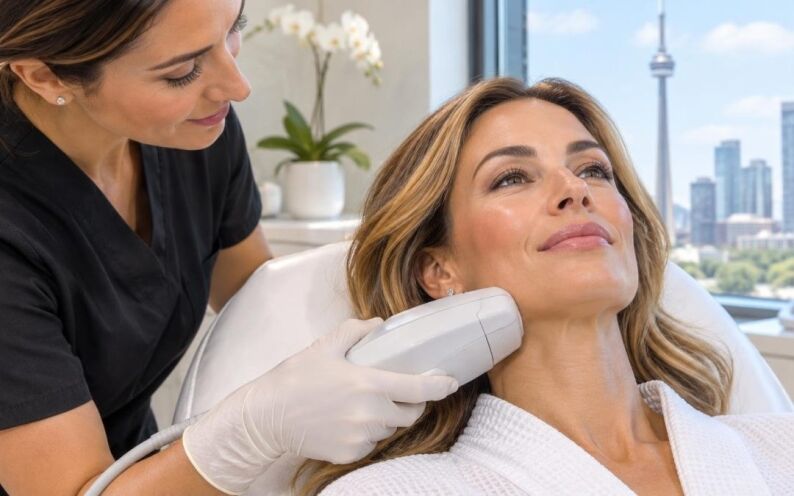
Early facial laxity can show up quietly. You may notice a slightly lower brow, less definition along the jawline, early jowling, or skin beneath the chin that no longer feels as firm as it once did. These changes can be frustrating, especially when you still feel that your face looks like you, just a little less rested or defined.
For some people, Ultherapy in Toronto may be a non-surgical way to address these early changes without incisions or extended downtime. At our Yorkville clinic, we start with a personal assessment because the right approach depends on your facial structure, skin quality, degree of laxity, and goals.
Restore Subtle Lift Before Laxity Deepens
Mild laxity does not always call for surgery. When skin changes are still modest, collagen-stimulating treatments may help support a gradual improvement in firmness. These treatments are designed for people who want a natural-looking result rather than a dramatic, immediate change.
As a facial plastic surgeon, Dr. Cory Torgerson looks beyond one area of concern. We consider how the brow, cheeks, jawline, chin, and neck work together, since a change in one area can affect the overall balance of the face.
An in-person assessment helps us determine whether ultrasound treatment fits your concerns or whether another approach may better match what you see in the mirror.
How Ultherapy in Toronto Targets Early Facial Laxity
Focused ultrasound energy is used to target deeper layers of tissue beneath the skin’s surface. The outer layer of skin remains intact, while the energy is delivered to planned treatment depths. Ultrasound imaging helps guide treatment planning so we can assess the tissue being targeted during the procedure.
The treatment is intended to stimulate the body’s collagen-building response. Over time, collagen remodelling may improve the feeling of firmness and create a modest lifting effect for suitable candidates. Results are gradual, which appeals to people who want others to notice that they look refreshed without necessarily knowing why.
Common treatment areas:
- The brow area, where mild descent can create a tired appearance
- Beneath the chin, where early looseness may soften the profile
- The neck, where skin can begin to look less firm
- The décolletage, where some people notice creasing or laxity
Lower-face concerns require careful assessment. Early jawline softness may respond differently from more established jowling, significant skin excess, or changes caused by volume loss. Rather than assuming that one treatment will address every concern, we tailor the plan to what is actually contributing to the change.
Who May See the Best Value from Ultherapy
Ultherapy treatment may be worth considering if you have mild to moderate skin laxity and would prefer to avoid surgical recovery. Many people exploring this option are not ready for a surgical facial procedure, or they may simply want a subtle treatment that works gradually with their own collagen response.
Good skin quality and realistic expectations matter. It is not meant to duplicate the lifting power of surgery. Instead, it may suit someone who wants a measured improvement in skin support and firmness, with results that develop over time.
We often discuss Ultherapy with people who want to address:
- early brow descent or a less open appearance around the eyes
- mild looseness under the chin or along the neck
- a softer jawline without major skin excess
- subtle facial changes that do not yet require surgery
There are situations where Ultherapy is not the strongest standalone choice. Pronounced jowling, a large amount of loose skin, or deeper volume loss may call for a different plan. Depending on your needs, we may discuss injectables, skin rejuvenation treatments, surgical facial procedures, or a combination of options. The goal is not to force one treatment to solve every concern. It is to choose an approach that makes sense for your face.
What Results, Recovery, and Timelines Can You Expect?
Treatment begins with planning. We review the areas that you would like to address, assess your anatomy, and use ultrasound imaging as part of the treatment process. During energy delivery, you may feel brief sensations of warmth, tingling, or pressure beneath the skin. Comfort measures may be considered, when appropriate, for your treatment plan.
Most people can return to regular activities soon after their appointment. Temporary redness, tenderness, swelling, or tingling may occur, and these effects can vary from person to person. We provide aftercare guidance based on the areas treated and your individual experience.
Patience is part of the process. Because the treatment works through collagen remodelling, changes usually appear gradually over the following months rather than immediately after treatment. Your age, skin quality, treatment area, and individual collagen response can all affect what you see.
It is helpful to think of Ultherapy as a treatment for refinement, not replacement. If your goal is a more dramatic repositioning of facial tissues, surgery may be the more appropriate conversation. If you want a modest improvement while keeping your routine largely uninterrupted, ultrasound treatment may be a reasonable fit.
How Ultherapy Compares with Other Options
Facial aging is rarely caused by one change alone. Skin laxity, volume loss, expression lines, texture changes, and pigmentation concerns can appear together, which is why treatment planning should be specific rather than one-size-fits-all.
Different treatments address different concerns:
- Fillers can restore or balance volume in selected areas.
- Neuromodulators can soften lines caused by repeated facial movement.
- Laser treatments may focus on skin texture, tone, or pigmentation concerns.
- Radiofrequency treatments may support more superficial skin tightening.
- Surgical facial procedures may be appropriate for more significant laxity or skin excess.
Ultherapy in Toronto is focused on deeper tissue support and collagen stimulation. It does not replace lost volume in the way fillers can, and it does not target dynamic wrinkles in the same way neuromodulators do. For some people, the best plan may combine treatments carefully over time, while others may benefit the most from choosing one focused option.
Book a Personal Assessment for Your Next Step
For the right person, Ultherapy in Toronto can be worthwhile, particularly when early laxity is present and the goal is a gradual, natural-looking improvement. During a personal assessment with Dr. Cory Torgerson, we can review whether ultrasound treatment suits your facial anatomy and whether another individualized option may better address your concerns.
Before deciding, focus on the change that you want to improve and the level of result that you hope to see. A thoughtful assessment is more useful than relying on generalized claims or before-and-after photos, because your skin, facial structure, and goals are uniquely your own.
Clarify Your Options for Subtle Facial Tightening
At Dr. Cory Torgerson, we can help you understand whether Ultherapy in Toronto aligns with your concerns and your desired degree of improvement. Our team will assess your facial anatomy, skin quality, and treatment goals to recommend an appropriate approach. Contact us to arrange a consultation.